

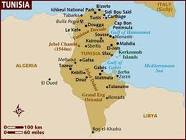
Tunisia: The revolution is over, can reform continue?
اضيف الخبر في يوم الإثنين ١٨ - يوليو - ٢٠١١ ١٢:٠٠ صباحاً.


Tunisia: The revolution is over, can reform continue?
The revolution is over in Tunisia and most of its citizens want it to be this way, according to conversations and interviews during a recent trip to the country. Protests, if they take place at all, are becoming increasingly marginal—small groups carrying signs and shouting slogans on the Avenue Bourguiba, the scene of the mass protests that brought down President Zine el-Abidine Ben Ali, receive hardly a glance from passersby going about their normal lives.
The end of the revolutionary phase of the Tunisian transformation is an inevitable and by-and-large positive development. Street protest can be a successful tool for tearing down the old—in countries with authoritarian systems, it may be the only means for political change. But street protest cannot build new institutions and develop a democratic system. At some point, revolution must give way to reform. The question in Tunisia now is whether the reform process can gather momentum or the country will stagnate in a political limbo, having gotten rid of Ben Ali and the top layer of his regime but unable to move forward.
The answer to the question is not a foregone conclusion. Tensions and divisions among political forces that are immediately apparent to a visitor may well put a brake on the reform process. The chasm that separates Islamist organizations from the rest is at the center of the tension. There is real fear of Islamist domination in Tunisia, particularly by the segment of the urban population long accustomed to a free lifestyle where religion is a private choice. But there is also real fear on the part of the Islamist organizations about something rather nebulously called the “left,” a term that seems to denote most organizations from the moderate center-right to the extreme left. To make matters worse, both sides appear paranoid in their fears, setting forth arguments that appear irrational to an outside observer. | CONTINUE READING ► |

اجمالي القراءات
653
أضف تعليق
لا بد من تسجيل الدخول اولا قبل التعليق
ÇÎÑ ÇáÇÎÈÇÑ
more

اخبار متعلقة
دعوة للتبرع
مقالات من الارشيف
more





أكاذيب ابن اسحاق: سلام عليکم يا دکتر احمد صبحي منصور : انا ليس من...
التدخين والنذر: هل في الإسل ام طريقة أُلِز ْمُ بها نفسي...
فيلم شيعى عن فاطمة: جمع الشيخ الشيع ي المتو اجد في لندن ياسر...
المكر الطيب: يقول الله جل وعلا : ( ( اسْتِ كْبَا راً فِي...
آيات موسى التسع: ماهى التسع آيات لموسى عليه السلا م فى قول...
moreالرئيسية | عن الموقع | التيار القراني | القرانبحث | الاتصال| اساسيات اهل القران
 Copyrights (c) 2006 MAH
 جميع الحقوق محفوظة(amir@ahl-alquran.com)