

Hurting Stalemate in Syria
اضيف الخبر في يوم الخميس ٠٢ - فبراير - ٢٠١٢ ١٢:٠٠ صباحاً.

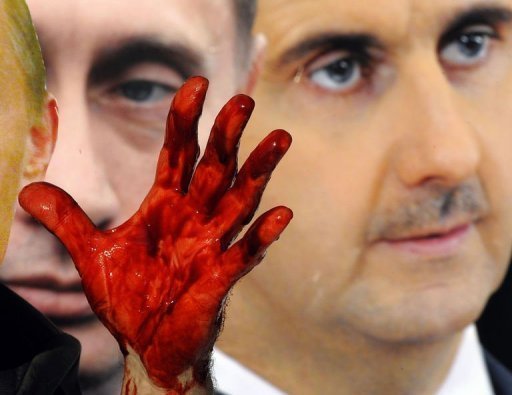
Hurting Stalemate in Syria
Hurting Stalemate in Syria
By Yezid Sayig
Yezid Sayigh is a senior associate at the Carnegie Middle East Center. Previously, Sayigh was professor of Middle East studies at King’s College London. From 1994 to 2003, he was the assistant director of studies at the Centre of International Studies at Cambridge University. Sayigh also headed the Middle East Research Programme of the International Institute for Strategic Studies (IISS) in London from 1998 to 2003.
Once again, the quickening pace of events in Syria gives the impression that the regime of Bashar al-Assad is fast approaching its moment of truth. That the government’s days are numbered can no longer be in serious doubt, but just how many it has left remains an open question. The regime cannot win, but it certainly can resist and prolong the conflict.
A flurry of reports in the second half of January depicted the Syrian leadership as increasingly unable to defeat armed challenges to its control over towns and neighborhoods—even those lying within the greater metropolitan area of the capital, Damascus. The diplomatic noose also appears to be tightening: The collective decision of the Gulf Cooperation Council member states to withdraw their observers from the Arab monitoring mission in Syria was immediately followed by the release of a new Arab League plan that called on Syrian President Bashar al-Assad to transfer power to an interim president and a national unity government. Those forces would govern until parliamentary and presidential elections could be held within six months. The Arab League then suspended its observer mission altogether, although the Syrian authorities had already agreed to extend it for another month, and took its new plan to the United Nations for adoption by the Security Council.
This is the second time in as many months that the Syrian crisis has seemed to be building rapidly toward a tipping point under the impetus of much the same combination of events. In late November, the League of Arab States declared an economic boycott targeting the Syrian authorities, which was followed by a Western initiative, blocked by Russia and China, to impose United Nations sanctions. Calls multiplied for the creation of a no-fly zone over Syria or the establishment protected border safe havens for refugees and “humanitarian corridors” for the delivery of assistance to besieged populations inside the country. Reports of Syrian army defections surged in the first half of December 2011, as did claims of attacks on government forces and installations by the opposition's Free Syrian Army. For its part, the Syrian regime released “trial balloons” containing political proposals purportedly intended to demonstrate its willingness to reach a negotiated solution. It repeated that ploy in January 2012 by leaking reports that it had dispatched envoys to talk to the opposition abroad. Yet dramatic change in Syria might not be imminent. The regime still has enough resilience and resources—social, economic, and especially coercive—at its disposal to delay its demise, though not to overcome its opposition.
The critical factor is that, despite growing international pressure and anticipation, there will be no external military intervention prior to regime breakdown. Intervention could otherwise catalyze splits within the leadership and accelerate the defection of the regime’s middle-class supporters, tipping the internal balance decisively. But the League of Arab States, which has unexpectedly done more than any other external actor to isolate the Syrian regime and legitimize both domestic Syrian opposition and international action against the Assad government, has reached an impasse that is unlikely to be broken by the United Nations Security Council.
In the absence of external military intervention, the course of developments inside Syria will be shaped by the same legacy of state-society relations and political economy that determined where the uprising would start, spread, and so far remain: in the provinces, among rural populations, and among the urban poor. This not only explains the diverse and fractious nature of the opposition but also serves ominous notice that the more visible, civilian-based leadership structures may find themselves increasingly compelled to cede the lead in agenda setting to the Free Syrian Army. More worryingly, the power may go to the highly localized, inchoate, and potentially fractious forces that are spearheading the growing shift to armed struggle against the regime occurring in dozens of scattered locations around the country.
اجمالي القراءات
796
أضف تعليق
لا بد من تسجيل الدخول اولا قبل التعليق
ÇÎÑ ÇáÇÎÈÇÑ
more

اخبار متعلقة
دعوة للتبرع
مقالات من الارشيف
more




السعودية والحج : السؤ ال : جاء أمس فى موقع ( روسيا اليوم )...
أولو العزم: من هم أولوا العزم ؟وهل عددهم خمس...
عدالة شياطين الإنس : سوره المدث ر مكيه بالاج ماع يوجد منافق ين ...
نزول القرآن : لى استفس ار بخصوص نزول القرا ن ، اذا كان...
العم والعمات : ( يا ايها النبي انا احللن ا لك ازواج ك ...
moreالرئيسية | عن الموقع | التيار القراني | القرانبحث | الاتصال| اساسيات اهل القران
 Copyrights (c) 2006 MAH
 جميع الحقوق محفوظة(amir@ahl-alquran.com)