

Egypt's Transition and the Challenge of Security Sector Reform
اضيف الخبر في يوم الأربعاء ١٨ - مايو - ٢٠١١ ١٢:٠٠ صباحاً.

Egypt's Transition and the Challenge of Security Sector Reform
Wednesday, May 18, 2011
12:15pm to 1:45pm
Carnegie Endowment for International Peace
(1779 Massachusetts Avenue NW, Washington, DC 20036)
A light lunch will be served at 12pm.
Carnegie Endowment for International Peace
(1779 Massachusetts Avenue NW, Washington, DC 20036)
A light lunch will be served at 12pm.
Muslim-Christian clashes in a poor Cairo neighborhood on May 7 left twelve dead and provoked allegations of inadequate protection and intervention by security forces. After protestors stormed the State Security building in Cairo in March, seizing documents that revealed alarming surveillance tactics as well as grave human rights abuses, the government formally dissolved the notorious State Security Investigations apparatus and replaced it with a new “National Security” apparatus.
How different will the new security apparatus be from the old one in terms of personnel, mission, and methods? Should former security officials accused of human rights abuses be brought to account individually, or should Egypt undertake a comprehensive transitional justice process? What should a new security agency look like and how can further human rights abuses be prevented?
Please join us for a discussion on these critical issues with:
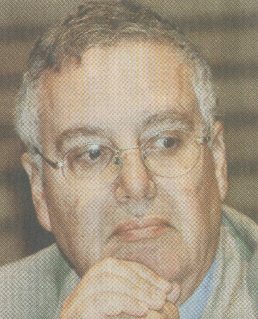
Mohamed Kadry Said
Military and Technology adviser and head of military studies unit, Al-Ahram Center for Political and Strategic Studies in Cairo
Omar Afifi
Former Egyptian police officer and Supreme Court lawyer
Robert Perito
Director, Security Sector Governance Center, United States Institute of Peace
Moderator: Michele Dunne
Senior associate, Carnegie Endowment for International Peace
Mohamed Kadry Said
Military and Technology adviser and head of military studies unit, Al-Ahram Center for Political and Strategic Studies in Cairo
Omar Afifi
Former Egyptian police officer and Supreme Court lawyer
Robert Perito
Director, Security Sector Governance Center, United States Institute of Peace
Moderator: Michele Dunne
Senior associate, Carnegie Endowment for International Peace
Click here to RSVP for the event.
Speakers
Mohamed Kadry Said, Ph.D., Maj.Gen.(ret.) is the military and technology adviser and head of military studies unit at Al- Ahram Center for Political and Strategic Studies. He also serves as the center’s coordinator at the Consortium of Research Institutes' Project for Regional Security in the Middle East and North Africa. Dr. Said is a member of the Egyptian Council for Foreign Affairs, various Euro-Mediterranean Security and Cooperation working groups, and numerous scientific organizations.
Omar Afifi Soliman, is a former police officer and Supreme Court lawyer in Egypt. He is the author of an extremely popular book about how to avoid police torture in Egypt, So You Don't Get Hit on the Back of Your Neck, that was banned by the Mubarak regime. He was also recently a Reagan-Fascell Fellow at the National Endowment for Democracy. More recently, Afifi was active on the Internet and elsewhere in helping organize the January 25 protest movement that led to the overthrow of President Hosni Mubarak.
Robert Perito directs USIP's Security Sector Governance Center under the Centers of Innovation. He also directs the Haiti and the Peacekeeping Lessons Learned Projects. Before joining the Institute, he was a Foreign Service officer with the U.S. Department of State, retiring with the rank of minister-counselor. He was deputy executive secretary of the National Security Council (1988-1989).
Moderator
Michele Dunne is a senior associate at the Carnegie Endowment for International Peace and editor of the online journal, the Arab Reform Bulletin. A former specialist at the U.S. Department of State and White House on Middle East affairs, she served in assignments including the National Security Council staff, the Secretary of State’s Policy Planning Staff, the U.S. embassy in Cairo, the U.S. consulate general in Jerusalem, and the department of state’s bureau of intelligence and research.
Please contact Anna Newby at anna.newby@pomed.org with any questions.
اجمالي القراءات
772
أضف تعليق
لا بد من تسجيل الدخول اولا قبل التعليق
ÇÎÑ ÇáÇÎÈÇÑ
more

اخبار متعلقة
دعوة للتبرع
مقالات من الارشيف
more




إختلافا كثيرا: ماذا يعنى قول الله سبحان ه وتعال ى :...
يطيقونه : انا من إندون يسيا لا أحسن لغة العرب ية اريد...
سؤالان : : السؤ ال الأول عندن ا كلمة البخت ، ونقول : (...
الفرج والفروج : أشعر بالتح رج عندما أقرا فى القرآ ن الكري م ...
ست البيت: عندنا فى مصر نقول عن الزوج ة ( ست البيت ) .. هل هذا...
moreالرئيسية | عن الموقع | التيار القراني | القرانبحث | الاتصال| اساسيات اهل القران
 Copyrights (c) 2006 MAH
 جميع الحقوق محفوظة(amir@ahl-alquran.com)